


AFTER GRADUATING FROM music school, Ellinor moved to the Netherlands. She completed her master classes there and eventually settled down. As a young concert pianist, she had no shortage of engagements and achieved a fair measure of success—which, in the world of classical music, is a great deal.
The years pass. Then she meets him.
From that moment on, she is back in France.
And that is where the story of their love begins.
She still lives today in the place that suddenly became hers, with the man who just as suddenly became hers, and who loves her. He has never stopped loving her. And now, after all these years, she watches evening slowly descend into his aging eyes.
He has never stopped saying it.
“You’re my sun.”
And she has never stopped contradicting him.
“No, my darling, I’m not. In French, le soleil is masculine, remember? The sun is a man. That’s you.”
He replies,
“You’re a woman, but you’re strong, and you shine too. That’s why you’re the sun.”
She laughs, while still searching in vain for the one argument that will finally prove him wrong.
“I’m really not that strong. Physically, least of all,” she protests.
And back he comes.
“You have a strong soul! That’s what I mean when I say you’re my sun. You know perfectly well that’s what I mean. Just admit it.”
And I—because it is I—say,
“No, you are. Especially when you look at me the way you’re looking at me now. You’re shining on me directly.”
And so our conversation goes on and on. He never gives up.
“No, no, no, my love, it’s really the other way around. You’ve got it completely backwards. I’m more like the moon. The moon is illuminated by the sun. By you. That’s why it seems as though I produce light of my own. But I don’t. It’s an optical illusion. A simple matter of physics. That’s what moons do.”
“My darling, don’t say that. I love you far too much.”
“Ah, but don’t you see? That proves I’m right. The sun is love itself. And love always shines.”
“My love, you must never be cold. Never. Please promise me that. N’ayez pas froid, mon chéri, jamais. Je vous en prie.“
“All right, then. I told you so, didn’t I? My dear Sun. I promise.”
I said, n’ayez pas froid. You mustn’t be cold.
In French, lovers may also address each other as vous. Sometimes it is extraordinarily tender.
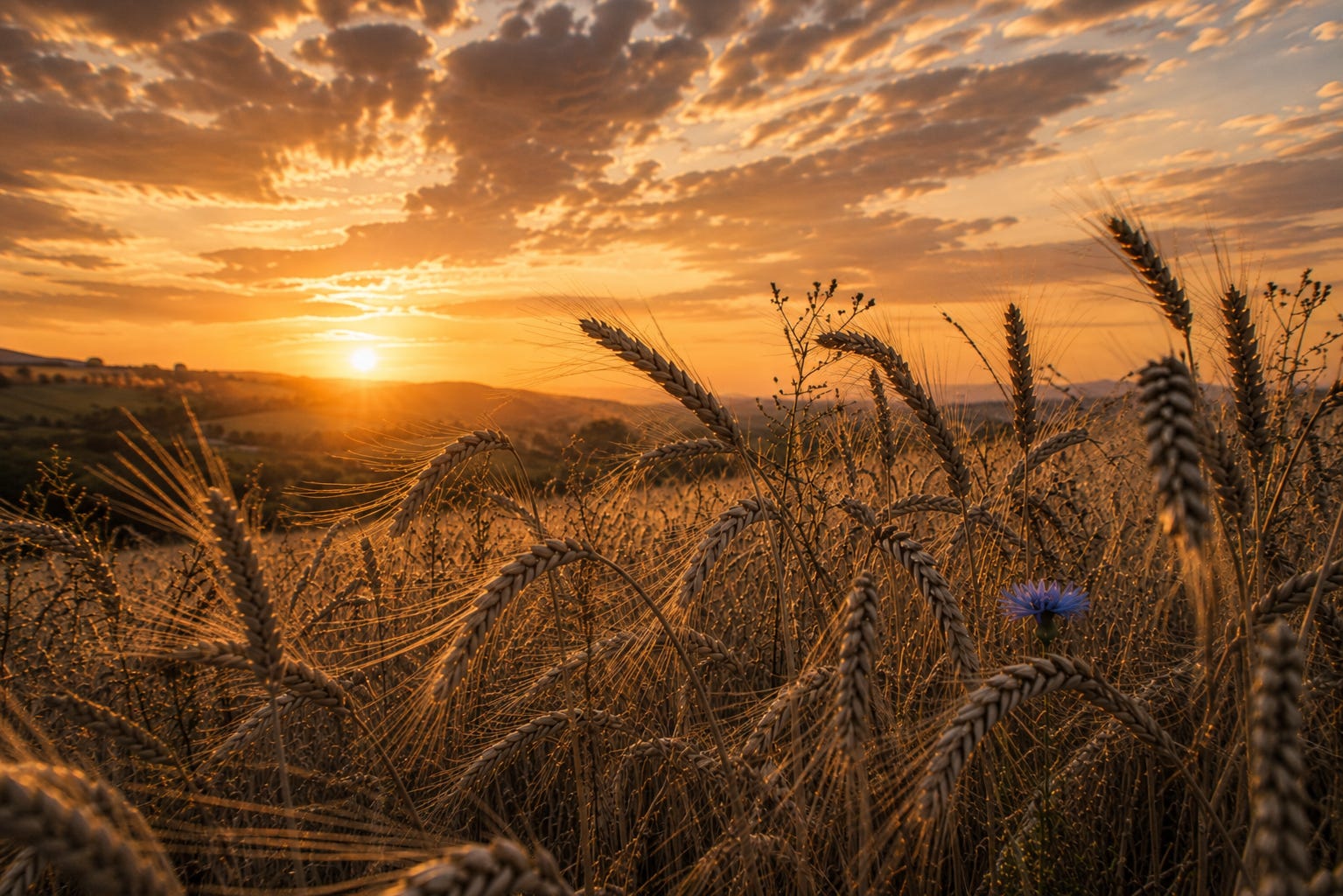
And I mean it. I say it because, over the years, I have watched the sun within him become an evening sun. It makes him more and more beautiful.
And more vulnerable. I know that. I don’t want to lose him.
Stay with me, my love.
That is the real message. And he understands it perfectly.
After one of these verbal caresses—often disguised as a playful argument—and after the passionate language of our bodies, he goes back to work. Usually that means taking care of things around the house or returning to the endless demands of his profession, unless he has arranged to meet friends.
Whenever I give a concert, he is somewhere in the audience. He never joins the conversations afterward. Instead, he takes a walk or slips away for a glass of wine or an espresso, patiently waiting for me.
It is because of those concerts that I know with such certainty about the sun. Whenever I play, I can see him sitting there in the hall. And how could you not see it?
He shines on me with his gaze exactly as the sun shines upon you.
That is why I can never—never—agree with him whenever, in his love for me, he attributes to me what truly belongs to him.
Still, he persists. In time, I made my peace with it. Let him see what he wants to see.
I can imagine that even the great sun in the sky cherishes that same longing: that one day the children of the earth may become little suns themselves.
That must be it, I think. Perhaps the sun wants to know it has not shone in vain. It is the idealism of the sun.
And the fact that my husband is just as relentless—perhaps even a little excessively so—and so wonderfully stubborn is, in truth, one of the things I love about him. Perhaps it is a little naïve. But it is endearing. And it suits him perfectly.
Whenever I spend a long time bathing in the golden glow of my beloved’s gaze, I find myself crying, because his eyes move me so deeply. Fortunately, he never asks whether my tears mean sadness. I don’t believe he thinks they do.
I know his patients know that same look in his eyes. After all, the sun shines for everyone.
He had large, attentive, coal-black eyes, and large, searching hands that were every bit as attentive. Time and again, it was with those that he conquered me. There was a dignity about him that had nothing to do with physical beauty, for he was not a handsome man. But I thought he was magnificent.
Making music, philosophizing, praying... Why, I don’t know, but he left all of that to me. He himself was a practical intellectual, as doctors so often are.
In the village where we lived, deep in a remote rural region, there was no room for medical specialization. People simply came to him, and with his intelligent, loving hands he treated whatever needed treating. He delivered babies and, when necessary, treated animals. He was psychiatrist and pastor, stitched wounds, tended the injured, sat beside the dying, and joked with children suffering from illnesses.
He used to say there was actually very little he knew how to do, and that I must keep this secret well hidden. We always laughed about that together. I told him it wasn’t true.
It wasn’t.
And for once, he wouldn’t argue with me.
What he dreaded, every single time, was having to send one of his patients to the hospital eighty kilometers away, never knowing whether that patient would return, or in what condition.
I had met him after one of my concerts. He was sitting, in the characteristic way that later became so familiar to me, at the end of a row, not far from the stage where I was playing the grand piano. He followed everything there was to hear, accompanying me with his attentive gaze.
Entirely out of character—though I didn’t know that yet—he came into the foyer afterward. That was how we met.
He told me he had loved the concert. Then he asked whether I was a Hollandaise. And whether I lived in France.
I told him I was on tour, that I hadn’t lived in France for a long time, but that I would very much like to live there again.
He said that he did live in France, but wasn’t sure whether he actually wanted to. In fact, he added, he had never really thought about it.
That made me laugh.
“Why are you laughing?” he asked.
“I don’t know.” And then I laughed even harder, suddenly filled with happiness. “Would you like to have a glass of wine with me?” I heard myself ask him
“Gladly. Just one, though. I still have a long drive ahead of me.”
“How far?”
“Eighty kilometers.”
“So you drove eighty kilometers just to hear me play?”
“And to see you! Don’t leave that part out. Yes, now that you mention it, I did indeed drive eighty kilometers for that. And in a little while I’ll drive back, making it a hundred and sixty altogether. At least, according to my calculations.”
“And were all those miles worth it, monsieur?”
He smiled
“Now you’re embarrassing me with questions like that! Is this how les Hollandaises behave?”
Then, after a moment, “Are you even a Hollandaise? You speak such beautiful French. As if you were from here. But yes—it was worth every kilometer. The only thing is... I’m not nearly as eager to drive home now as I was at the beginning of the evening.”
“And why not?”
By then, it was slowly dawning on me that I was flirting with him.
And he was flirting with me too, only much more subtly—and far better—than I was.
“Écoutez, Hollandaise...“
“No. It’s miss. My name is Ellinor. And in reality I happen to be a real Française... well... perhaps a littlebit Dutchified by now.”
“Ah, Élénore..
“Oui.”
“Élénore, my name is Pascale.”
I took his name in. It tasted like… I did not know. It felt like a name just asking to be tasted. Start using it immediately.
“Pascale, I have a question. Why don’t you feel like driving home anymore?”
“Très simple. Because earlier this evening, I hadn’t yet seen you. Or heard you. Now I have. So now I don’t want to leave.”
If this was flirting, this was a masterpiece. He said it like a diagnosis, stating a fact.
“Pascale, I’m about to go back to my hotel. It’s only one kilometer from here. But somehow, I don’t feel much like going there anymore as well.”
“Good,” he replied calmly. Then why don’t we take a walk together? The evening is wonderfully warm, and there are the stars.”
Then he looked at me with a teasing smile.
“By the way... why did you say ‘miss‘ a moment ago?”
“Because you missed.”
He frowned. “Not because you’re a Miss? Are you?”
“Oh, honestly! You’re getting rather bold.”
Then I laughed. “Actually... yes, I am. Not by winning a miss something contest. It’s a title that’s rather old-fashioned these days, but yes—I am.”
“Old-fashioned?”
“No—a Miss. Une demoiselle. You got that part right. Listen Pascale, I think that’s quite enough questions from you.’for the moment”
He had to think that over. He fell silent for a while. Then he said,
“Come and take a walk with me.”
After that first walk beneath the stars on that balmy evening, I knew he had been a widower for some time. It had happened years before, and he had loved his wife dearly.
“Denise would have liked you so much,” he said suddenly.
I had understood at once that he was speaking of his late wife.
“What makes you say that?” I asked.
“It isn’t something I simply imagine. That’s who Denise was. We were married for twenty years. I know her. You know these things.”
I swallowed the lump in my throat.
“That moves me,” I said.
“You see? That proves you’re kind. Denise was usually right about such things. Not that I’m constantly thinking about my late wife, mind you.”
“Oh, don’t defend yourself. It’s so beautiful, the way you say that—and the certainty with which you know she would have liked me. She still lives in your heart, doesn’t she?”
“Yes,” he said quietly. “She does. And I know I’m defending myself at the same time. It’s a great thing for me to be walking beneath the stars with you tonight and suddenly discover that there is always new life as well. Perhaps tonight, while you were playing for everyone, I caught a glimpse of it. Or heard it.”
The answer came to me of its own accord. A gate had opened. I knew it had, and yet it surprised me.
“I was playing for you too. I love making a connection with the people in my audience. Once that happens, I’m no longer so preoccupied with whether I’m playing well enough. But I didn’t know you yet, milord.”
Something lit up in his eyes. His lips trembled.
“I’m going to tell you something. Not my late wife buit myself. I’m very fond of you. And I don’t mean that in a sentimental way. I mean it.”
He spoke with complete seriousness.
Then, immediately, he apologized.
“Mais mille excuses, chère amie. I don’t want to impose myself on you.”
I tried to smile. But the lump in my throat had returned. I couldn’t smile at all.
“You’re not imposing yourself, Pascale,” I heard myself whisper. “You spoke of Denise first. Please, don’t worry. I’m not making fun of you, nor do I mean to be dismissive. I can feel the tenderness—and the vulnerability—in what you’re saying. It’s beautiful that you spoke of her before telling me what you’ve just told me. She was your wife, after all. It’s perfectly all right. In fact, that’s exactly why it touches me so deeply.”
Then, after a moment, I added,
“And I’m very fond of you too.”
They were only words. To me, they sounded rather awkward. To him, they did not.
We stopped on the deserted road, our faces close together.
He kissed me lightly on the lips. I closed my eyes.
Immediately, there came a second kiss. A long one.
A real one. One I was able to answer without holding anything back.
That was how we began.
But we were still shy.
Our first night together at the hotel remained entirely platonic. We sat with the balcony doors open, watching the stars, before each drifting into a modest little sleep.
I in the bed. He on a lumpy sofa.
The following day I was free. I drove home with him. That second night, in his house, I came to know the full power of the midnight sun—the love of his eyes, his hands, and his body.
That was the night we became husband and wife.
Ellinor had become Élénore. And she had found her milord.
To him, I would always be la Hollandaise. More often still, I became ma Hollandaise. I gradually understood that it had become a title, much as I enjoyed calling him milord.
From time to time, I would try once more to explain that, like him, I had originally been French and had merely lived in the Netherlands for a number of years.
He would wave the whole explanation away. He could be wonderfully stubborn. That was how I knew ma Hollandaise had become my title because he wanted it that way.
Just as I was the sun. And he wasn’t. Which was rubbish, but he stuck to that.
When our daughter Françoise was born, we found a new way of looking at it.
Now she was the little sunshine in our house.
We never argued about that.Not even when our little sunshine was angry, unreasonable, defiant, tangled up in adolescence, or unhappily in love.
The time will probably come when he will leave this world while I remain here.
If that happens, I’ll do my best to become the sun. Until then, he may go on telling me that I already am, however untrue I still believe this to be.
In the meantime, at least I can begin to practice.
Yet together, Pascale and I we would always rather look at a sky full of stars than watch the sun go down. I stick to that. For the day he has become one of them.
©Nina Rosewood All rights reserved
←back home
